Home/FlowTex Dewatering Technology • Manufactured in South Africa
Dewatering Trial Testing & Pilot Programmes
Compare fabric, conditioning, drainage, solids capture and cake formation before full-scale manufacture.
Dewatering Trial Testing & Pilot Programmes
Selected for your slurry. Manufactured for your project.
A representative trial links the sludge to the filter and operating arrangement. Agree the test scope and acceptance criteria before sending samples; trial testing can be coordinated as part of the technical proposal.
Product selection
Specifications that inform the right choice
Compare the published grades, then confirm the supplied construction and project requirements in the technical submission.
| Record | Details |
|---|---|
| Feed | Source/date, dry solids, density, grading, pH and relevant chemistry |
| Conditioning | Product reference, active basis, solution preparation, dose and mixing |
| Filter | FlowTex grade, liner/shell construction and test assembly |
| Measurements | Filtrate volume/time, TSS/turbidity, relevant chemistry and cake condition |
| Decision | Acceptance criteria, observations, limitations and pilot requirements |
Technical notes and test basis
Trial results apply to the tested feed and configuration. Confirm scale-up and operating limits separately.
From specification to site
Fabrication, QA/QC & African project supply
Sample and baseline
Record source, sampling date, feed variation, solids concentration, density, particle size, pH and relevant chemistry. Agree sample quantities and transport requirements for the proposed test.
Screen fabric and conditioning
Compare unconditioned and conditioned feed across candidate Mono, HF and composite constructions. Record filtrate volume against time, early filtrate, suspended solids and cake condition.
Pilot the fabricated assembly
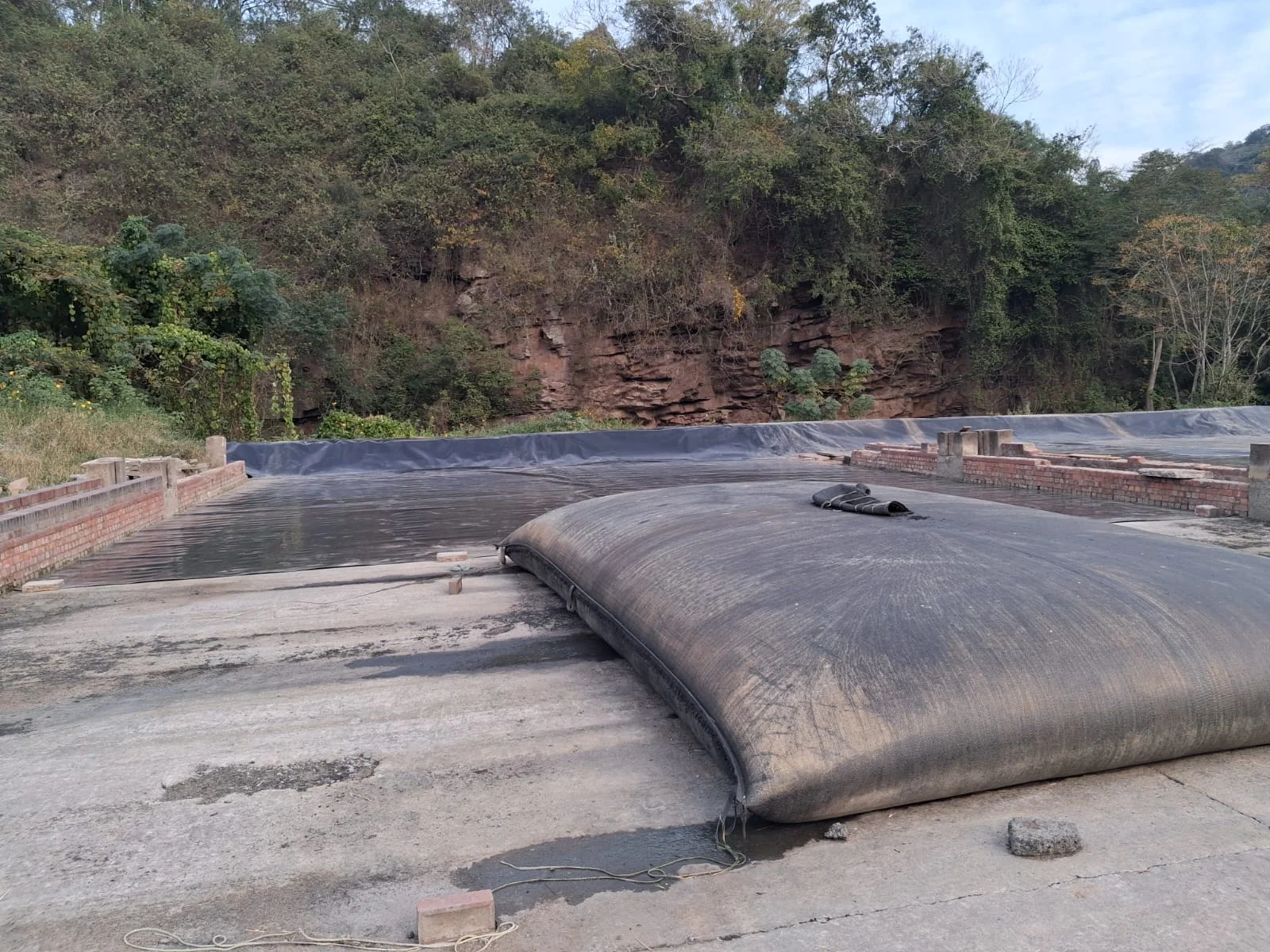
Where scale or risk warrants, assess ports, seams, filling height, hydraulic conditions and repeated cycles using a representative pilot. A hanging-bag result alone is not a full-size pump or production rating.
Issue a useful report
Document methods, sample basis, fabric reference, dose basis, observations, measured results, uncertainty and recommended next steps. Do not describe tests as independently certified unless the report establishes that status.
Agree the acceptance sheet
Before testing, define filtrate TSS or turbidity targets, relevant dissolved parameters, drainage observations, cake-solids measurement and evaluation times. Record chemical identity, preparation, active-dose basis, fabric and sample details.
Use the right test description
A jar or fabric-screening trial is not automatically a standard-compliant test. ASTM D7880/D7880M-22 describes closed-bag flow and suspended-solids testing and notes that site conditions may differ. ASTM D7701-11 was withdrawn in 2020; do not present it as a current certification.
FAQ
Frequently asked questions
Are FlowTex dewatering bags and tubes available from stock?
FlowTex holds stock for immediate supply. Ask for the available grade, dimensions and quantity; allocation is confirmed for the order. Custom dimensions or a different construction require a fabrication programme. Dispatch readiness and delivery time are confirmed separately.
What should I provide for a firm technical quotation?
Send the application, wet volume or flow, solids concentration and measurement basis, particle information, chemistry, filtrate target, dimensions, quantity, destination and required date. Identify any loaded handling requirement.
How is the fabric choice confirmed?
Compare published grade properties with representative slurry trials and the fabricated assembly requirements. The supplied construction, filling limits and handling arrangement are agreed for the actual project.
Discuss your dewatering specification
Send the feed, volume, filtrate target, dimensions, location and programme. We will help define the next step.